Flax Processing in the Colonial Era
“A Paper Mill near German-Town doth stand,
So that the Flax, which first springs from the Land,
First Flax, then Yarn, and then they must begin,
To weave the same, which they took pains to spin.
Also, when on our backs it is well worn,
Some of the same remains Ragged and Torn;
Then of those Rags our Paper it is made,
Which in process of time doth waste and fade;
So what comes from the Earth, appeareth plain,
The same in Time returns to Earth again.”
—Richard Frame, A Short Description of Pennsylvania, printed by William Bradford in Philadelphia, 1692
Richard Frame’s little poem describes an entire cycle of production that would have been familiar in early Pennsylvania: flax grew in the field, was turned into linen thread and cloth, worn as clothing or household linen, and finally—when it was too worn to patch again—sold or collected as rags for papermaking. Frame had good reason to connect linen and paper. The Rittenhouse paper mill near Germantown had been established in 1690, with printer William Bradford among its early partners. Rag paper depended heavily upon worn linen, so the linen trade quite literally supplied raw material for the paper trade.
Growing and Harvesting Flax
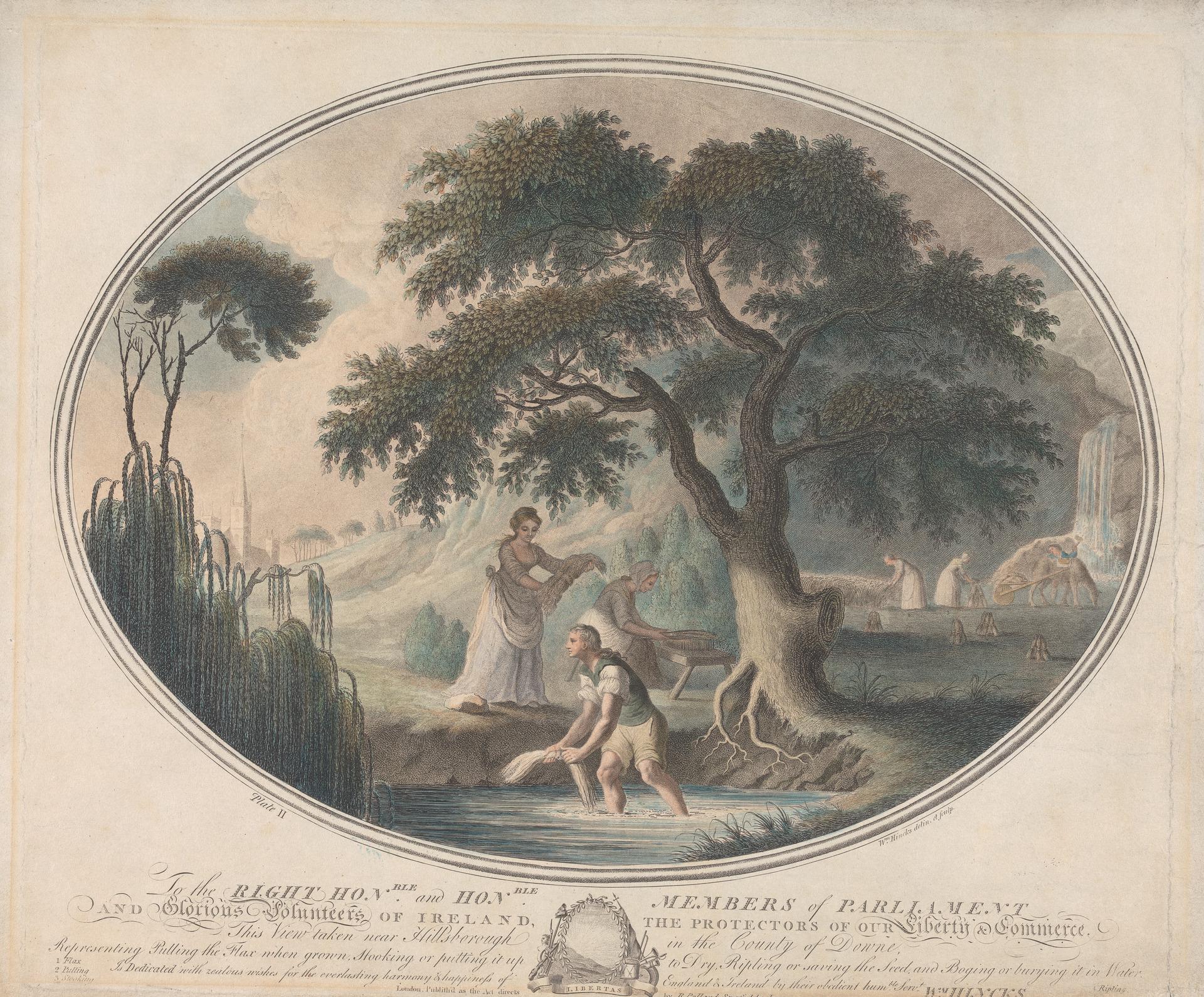
Flax (Linum usitatissimum) is a slender annual plant that generally grows two to three feet tall. Its narrow stems bear small blue flowers, followed by round seed capsules. Unlike a grain crop, flax intended for linen was planted closely together. Crowded plants produced tall, relatively unbranched stalks and therefore longer, finer fibers. The crop matured quickly, often in about one hundred days. When the lower leaves began to yellow and the seed heads matured, the flax was harvested—not by cutting it, but by pulling the entire plant from the ground. Pulling preserved the full length of the valuable fibers running through the stalk. The plants were gathered into bundles and allowed to dry before the next stage began.
Rippling and Saving the Seed
The seed capsules first had to be removed. Bundles of flax were drawn through an iron-toothed comb known as a ripple or rippling comb, which stripped the seed heads from the stems. The seed was valuable in its own right. Some was saved for the following year’s crop, while surplus flaxseed could be pressed for linseed oil. Linseed oil had numerous uses, including paints, wood treatments and printing inks. Only after the seed had been removed could attention turn to the fibers hidden within the stalk.
Retting: Loosening the Fiber
The usable linen fibers lie between the woody center of the stalk and its outer covering. They are held in place by natural plant substances that must be partially broken down before the fibers can be separated. This was accomplished by retting. Flax might be spread thinly over a meadow and left exposed to dew and rain for several weeks. This method, known as dew retting, allowed moisture and microorganisms to gradually loosen the fibers. A faster method was water retting, in which bundles were submerged in a pond, trough or slowly moving stream. Water retting worked more quickly but could produce a notoriously unpleasant smell. The skill lay in knowing when to stop: too little retting made the fibers difficult to separate, while too much could weaken them. After retting, the flax was spread out to dry thoroughly. Only then was it ready for the succession of mechanical processes that transformed a stiff plant stalk into something resembling soft hair.
Breaking the Stalks
The dried flax was first passed through a flax break or brake. This large wooden device had interlocking wooden blades. The operator repeatedly raised and lowered the upper section over a handful of flax, crushing the brittle woody portions of the stalk without destroying the long fibers. The broken fragments of the woody stem were often called shives or boon. Much of this debris fell away during breaking, but the fibers still required further cleaning.
Scutching
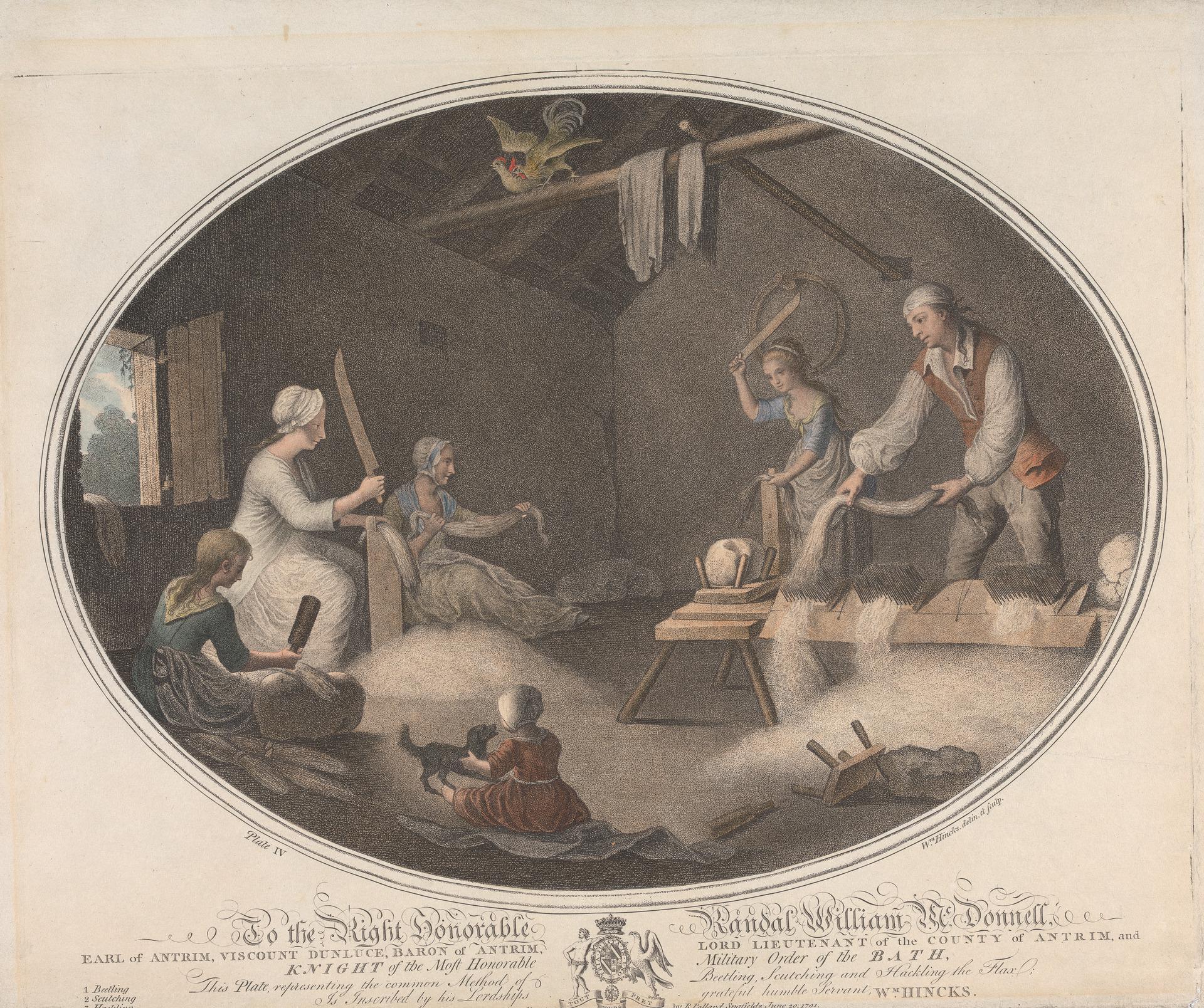
Next came scutching. A handful of broken flax was held against a vertical scutching board while it was struck and scraped with a broad wooden scutching knife or sword. The repeated blows knocked away more of the remaining woody material and began separating the long flax fibers into clean strands. It was dusty, repetitive work, but the transformation by this stage was considerable: what had begun as a dry stalk was becoming a mass of long, silky fibers.
Hackling
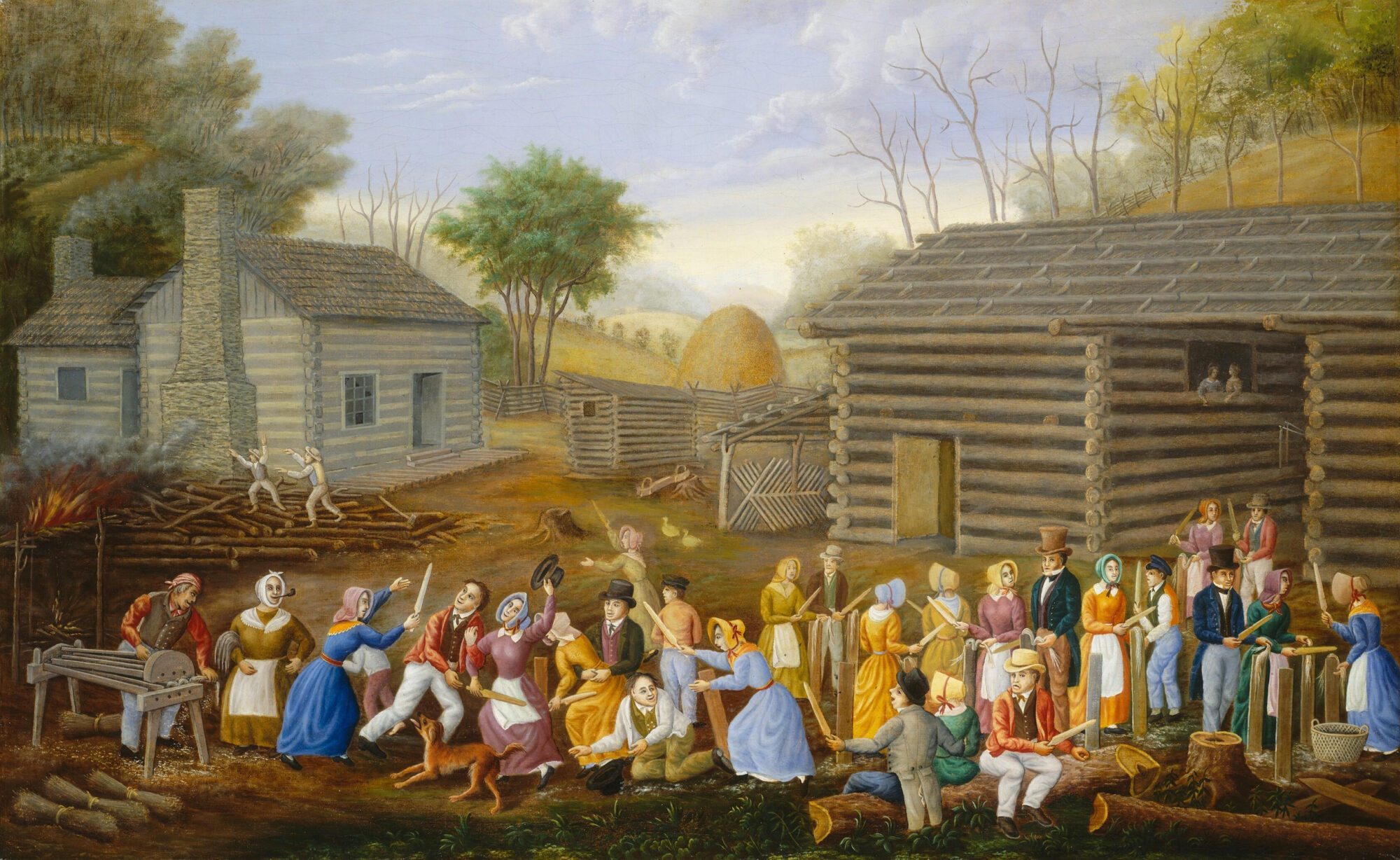
The flax was then hackled or heckled by drawing it repeatedly through upright iron combs. Coarse hackles were used first, followed by increasingly fine ones. Hackling removed the last fragments of stalk, untangled the fibers and separated the longest fibers from the shorter ones. The long, smooth fibers—sometimes called line flax—were used for finer linen. The shorter fibers left behind were called tow and could still be spun into coarser yarn suitable for sacks, work cloth, rope and other utilitarian textiles. The cleaned long fibers were gathered into bundles known as stricks until they were ready to be spun.
Spinning Flax into Linen Thread
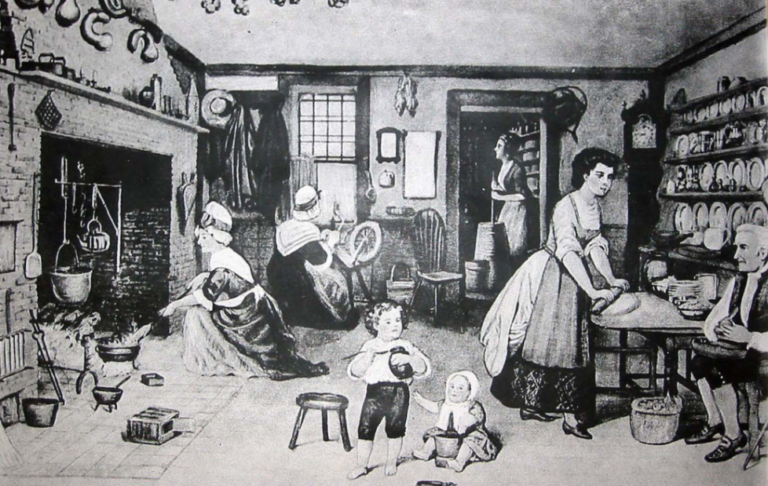
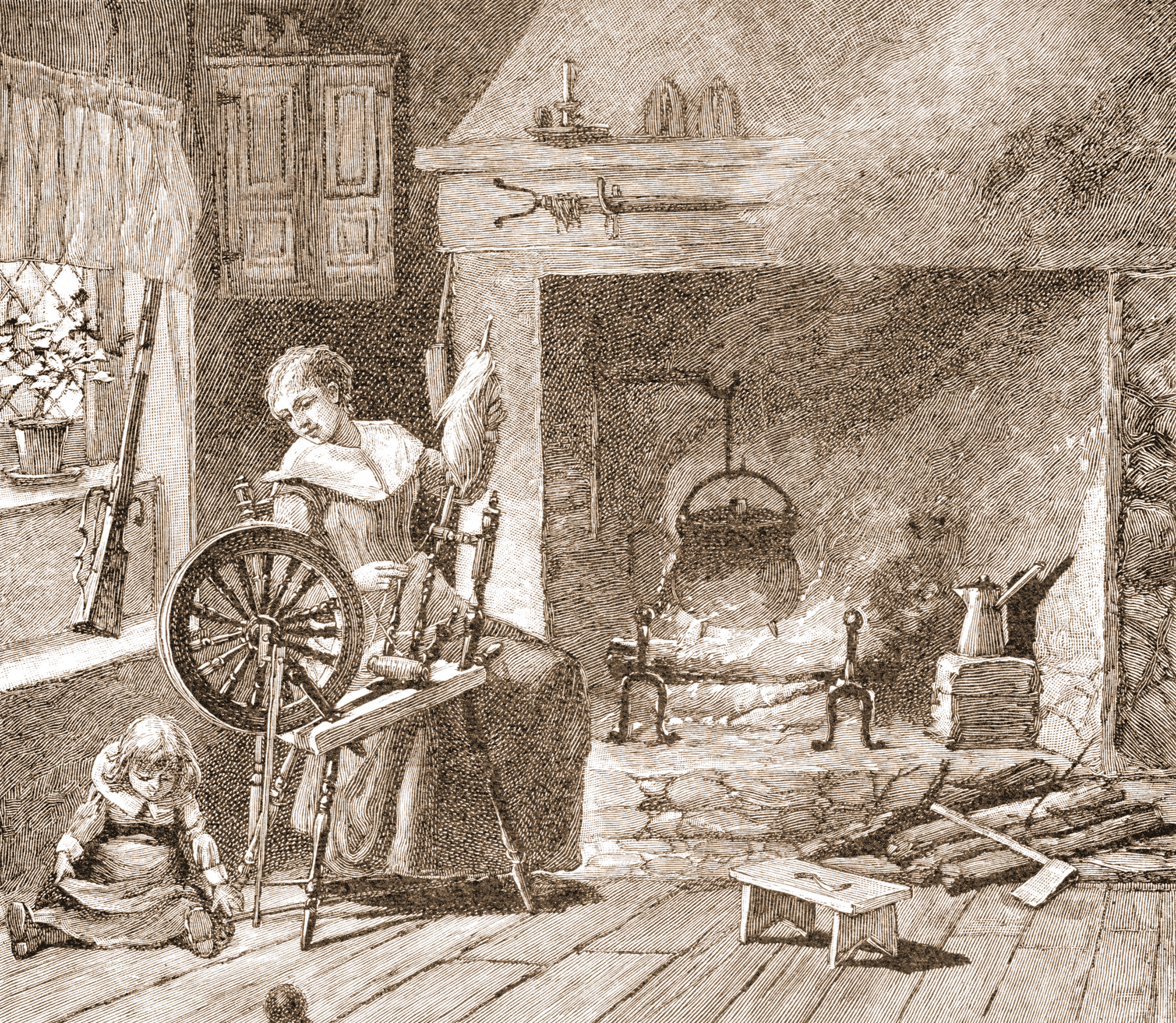
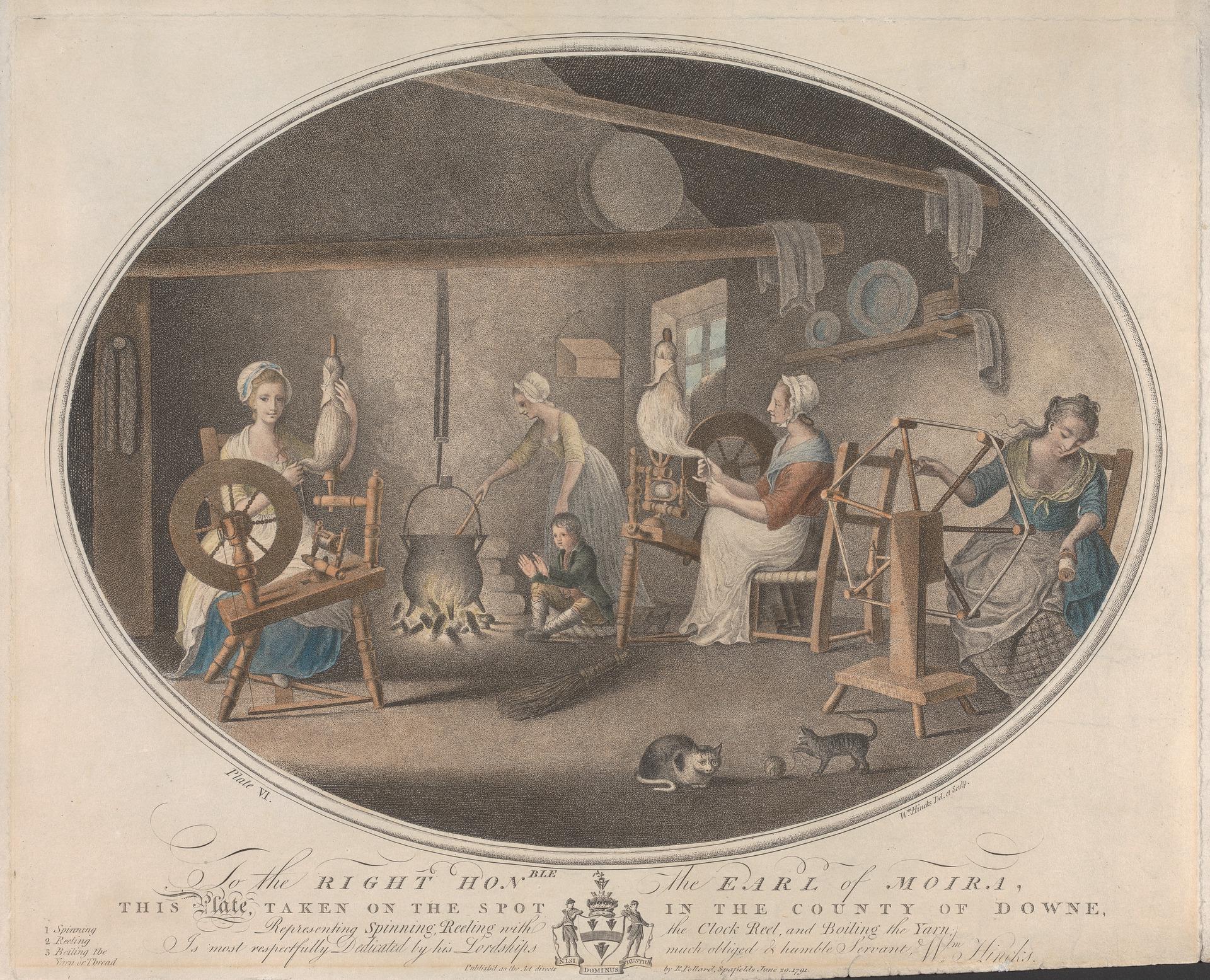
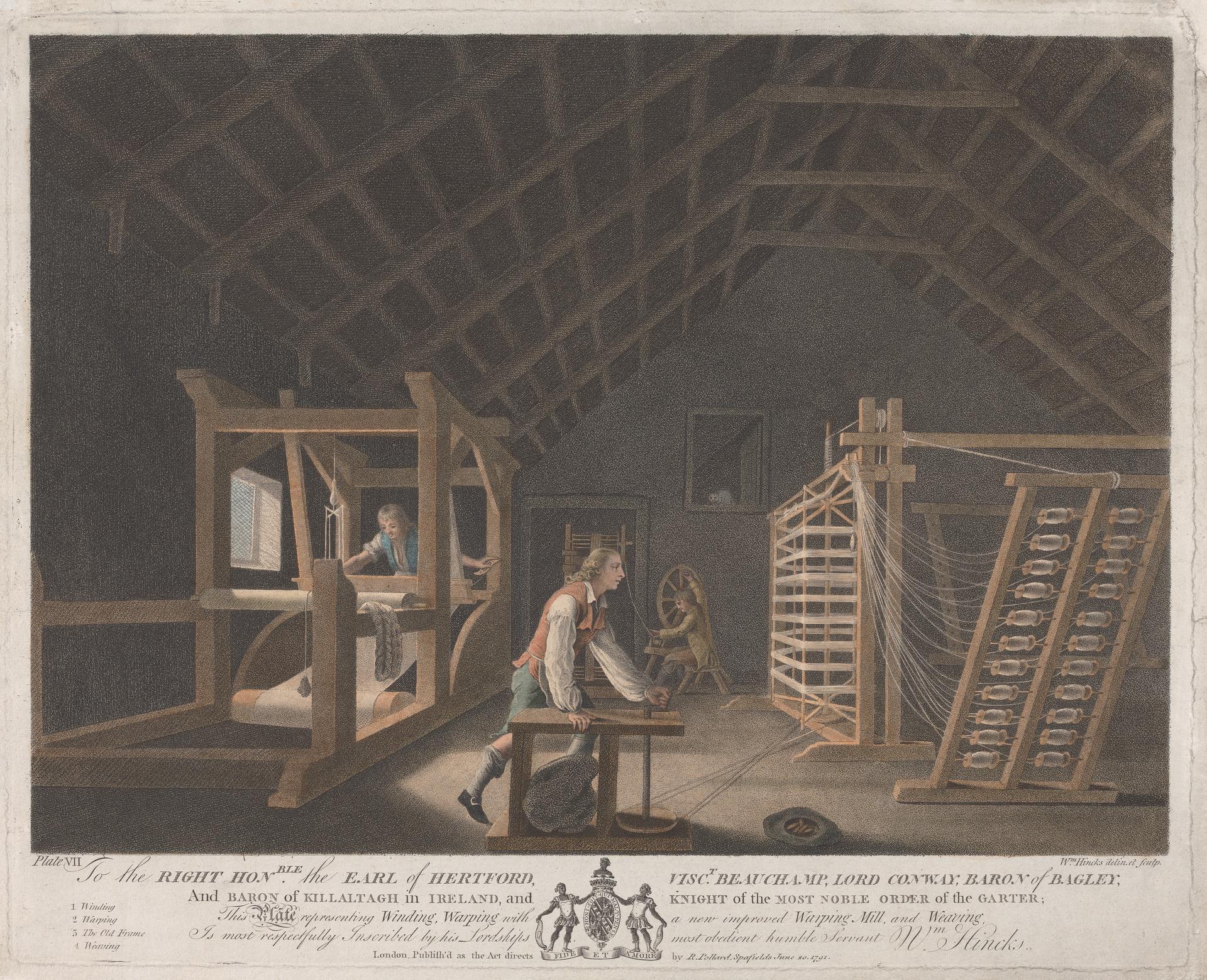
Spinning was often carried out during the winter months, when outdoor agricultural work had slowed. Women and girls commonly did much of the household spinning, although textile production as a whole involved the labor of men, women and children. Because flax fibers are long and smooth, they were normally arranged on a distaff beside the spinning wheel. The spinner drew out a few fibers at a time and twisted them into a continuous thread. Fine flax was generally spun damp or wet. Moisture helped smooth the fibers and bind their loose ends into a finer, stronger thread. A flax spinning wheel was therefore often equipped with a small water container so that the spinner could continually wet her fingers. Once spun, the yarn might be wound onto reels or into skeins and boiled or washed before weaving. William Hincks’s eighteenth-century illustrations actually show these activities occurring together in a household workshop.
From Yarn to Linen Cloth
Spun linen yarn then had to be warped and woven. Some families possessed their own looms, while others sent spun yarn to a professional weaver. Surviving records show that textile production could be a cooperative process: a household might grow the flax, have it dressed by a specialist, spin it at home, and then either weave it themselves or hire a weaver to make the cloth. The cloth that first came from the loom was not necessarily the snowy white linen we associate with finished household linen. Newly woven linen was commonly called brown linen because of its natural grey-brown color.
Repeated washing, alkaline solutions made from wood ashes, exposure to sunlight and moisture on a bleaching green gradually whitened the cloth. Commercial linen districts eventually developed specialized bleach works, but bleaching could also be carried out on a much smaller scale. The entire journey from planting flax to wearing finished linen stretched over many months and could easily extend into the following year.
Linen Was Too Valuable to Waste
Producing linen required an extraordinary amount of labor. Clothing and household textiles were therefore expected to last. Garments were altered, patched, handed down and reused. Worn cloth could become aprons, towels, cleaning rags or other household material. Only when linen was finally too ragged for further use did it enter another important trade: papermaking. Before wood-pulp paper became common in the nineteenth century, good paper was made largely from linen and other textile rags. Old linen was collected, sorted, cleaned, pulped and formed into new sheets of paper. That makes Richard Frame’s 1692 poem particularly apt. Flax came from the earth, became clothing, then became paper—and eventually returned to the earth.
Four years later, Pennsylvania poet John Holme made the same connection in his 1696 A True Relation of the Flourishing State of Pennsylvania (apparently not published until 1847). After describing the local paper mill and its need for rags, he ended with an appeal that must have been immediately understandable to his readers: “Kind friend, when thy old shift is rent, Let it to th’ paper mill be sent.”
Flax Production at a Glance
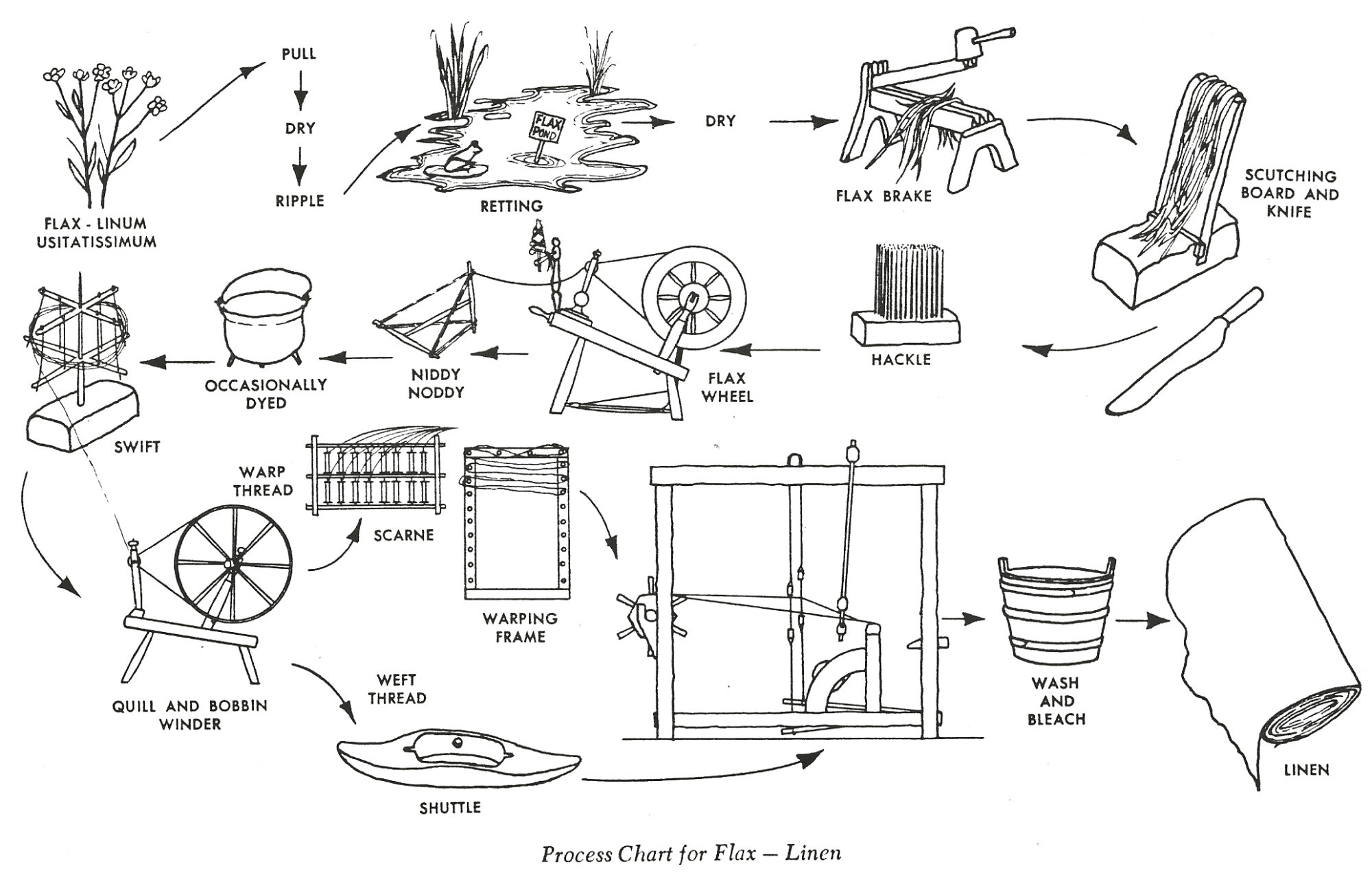
Soil preparation. Flax required well-prepared, fertile soil. Fields were plowed and harrowed finely before the small seeds were broadcast in spring.
Planting. Seed was sown densely when flax was intended for linen. Close planting discouraged branching and produced longer, straighter fiber.
Harvesting. When the plants matured and began to yellow, they were pulled from the soil by the roots and tied into bundles.
Rippling. Dried plants were drawn through a coarse iron comb to strip away the seed capsules. Seed was saved for planting or pressed for linseed oil.
Retting. Flax was exposed to moisture in a field or submerged in water until the tissues binding the fiber to the stalk began to decompose.
Drying. Retted flax was thoroughly dried before mechanical processing.
Breaking. A flax break crushed the woody stem into fragments.
Scutching. A wooden scutching knife knocked and scraped away the broken pieces of stalk.
Hackling. Fibers were drawn through progressively finer iron combs. Long fibers were reserved for fine linen; shorter tow was used for coarse yarn.
Spinning. Prepared flax was placed on a distaff and spun, usually with dampened fingers, into linen yarn.
Weaving. The yarn was wound, warped and woven into cloth either at home or by a specialist weaver.
Bleaching and finishing. Newly woven linen could be washed and repeatedly exposed to water, alkaline solutions and sunlight until the desired degree of whiteness was reached.
Learn More, Offsite Links
Just the Flax – The Library of Congress has a fascinating collection from the Stahlstown Flax Scutching Festival in Westmoreland County, Pennsylvania. This is especially useful because flax processing was kept alive there as an old local tradition.