Dry Lands: The History of a Forgotten Pennsylvania Place-Name
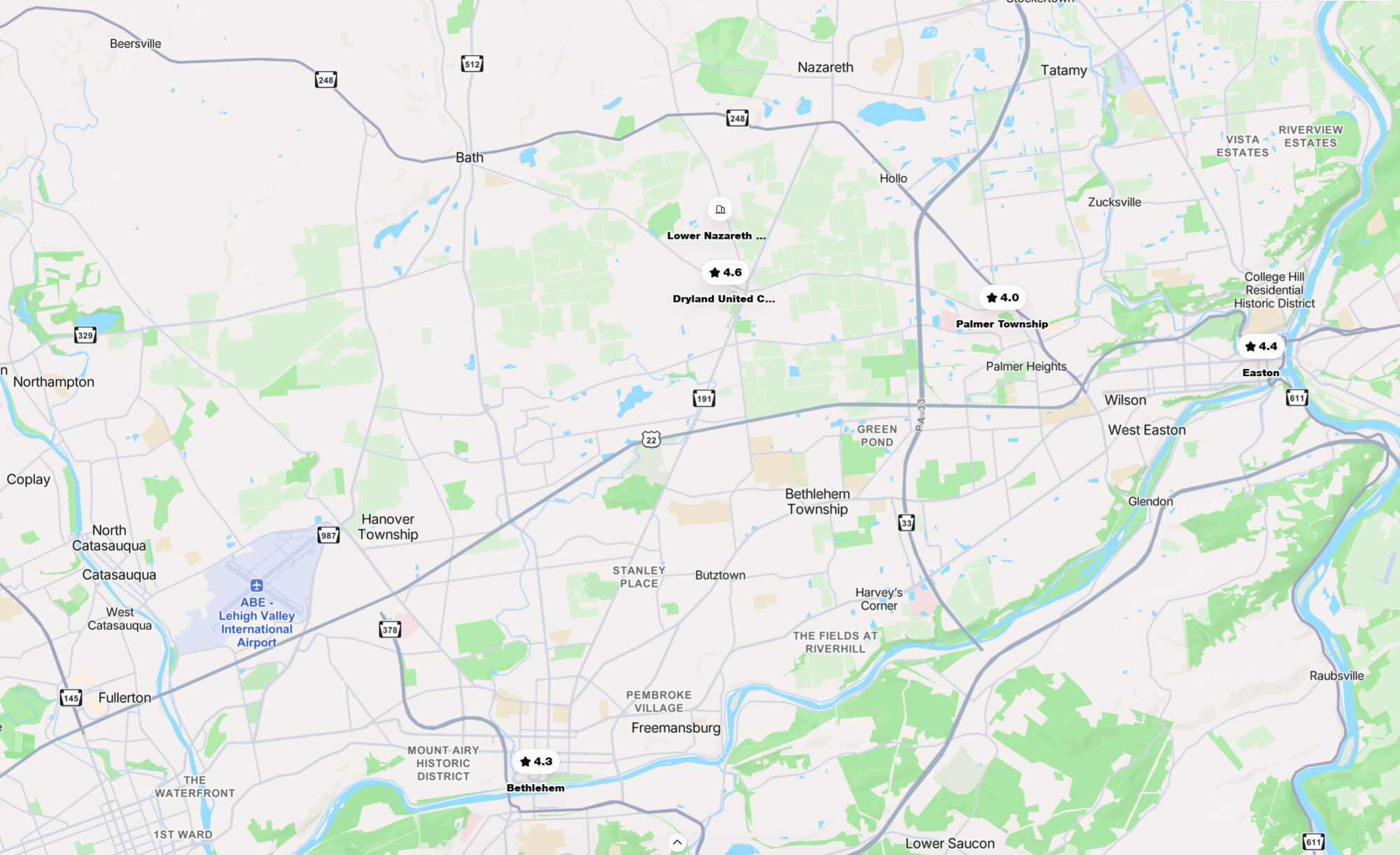
The Dry Lands, also called Dryland, the Drylands, or the Barrens, was the name once given to a large area of Northampton County, Pennsylvania, between Bethlehem and Easton. The name described a region rather than a town with definite boundaries. It encompassed portions of what are now Bethlehem, Hanover, Lower Nazareth, and Palmer townships. Today, much of this countryside is covered with productive farms, residential developments, and commercial properties. In the eighteenth century, however, the Dry Lands had a reputation for being an inhospitable place, with few settlements and little readily available water.
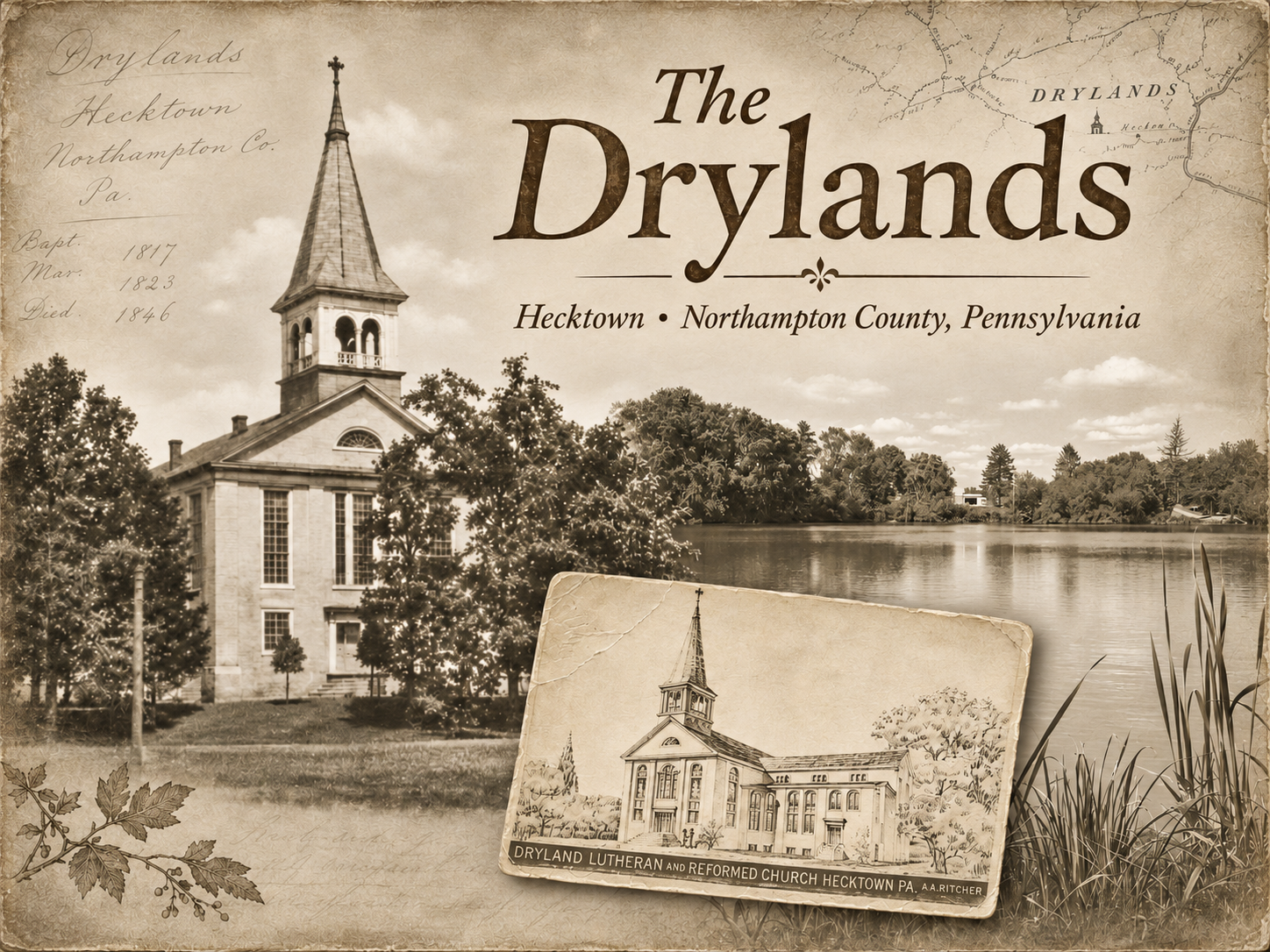
Theodore Straub, my 5th great-grandfather, was born in what is known as Dry Land, which was described as “a little hamlet located between Easton and Bethlehem” in a 1905 book. Historical accounts describe early settlements around Drylands Pond, between present-day Hecktown and Farmersville.
Why Were They Called the Dry Lands?
The name arose from the scarcity of springs and streams across the limestone countryside. Although the soil was potentially fertile, water often disappeared underground rather than remaining on the surface. Early European settlers favored the valleys and stream banks, leaving much of the higher land unsettled.
Some portions were covered with scrub oak and brush rather than the dense forests found elsewhere in the region. This appearance contributed to the belief that the land was barren and unsuitable for agriculture.
The difficulties of traveling through the Dry Lands became a matter of public complaint. Around 1765, residents petitioned to have the Northampton County seat moved from Easton to Bethlehem. They complained that the road to Easton passed through a sparsely settled region where travelers and their horses could find little shelter or water.
By the nineteenth century, the area’s reputation had changed dramatically. Land once dismissed as nearly worthless had become some of the most productive farmland in the county.
Early Settlement and the Penn Family
The Dry Lands lay within the Forks of the Delaware, a region occupied by the Lenape people long before European settlement. Colonial expansion accelerated during the eighteenth century, particularly following the disputed Walking Purchase of 1737, through which the Penn proprietors acquired extensive Lenape lands. Large portions of the Dry Lands remained in the possession of William Penn’s descendants. These holdings became associated with the Manor of Fermor, named for Juliana Fermor, whom Thomas Penn married in 1751.
In The Penn Patents in the Forks of the Delaware (1937), historian A. D. Chidsey Jr. describes three large proprietary tracts associated with the Manor of Fermor: approximately 12,000 acres and 8,000 acres west of Easton, and another 4,500 acres north of the town. The two western tracts had been surveyed in 1741, while the northern tract was surveyed in 1754 and 1755. The Penn family intended to retain these properties rather than immediately sell them to settlers. Nevertheless, families gradually moved onto the land, cleared fields, built houses, and established farms without obtaining formal title. Some settlers even bought and sold improvements to properties they did not legally own.
The Dispute Over Land Ownership
The situation became more complicated during the French and Indian War, when families living near the Blue Mountains abandoned their homes and sought refuge farther south. On March 1, 1759, two settlers, Walter Miller and John Yse, wrote to Richard Peters, secretary of the province, explaining that they had been driven from their former homes and had settled on the Dry Lands about six miles from Easton. They asked permission to remain and offered either to purchase the property or pay rent. Their request was refused. Peters prohibited further settlement and the purchase of improvements on the proprietary lands. The settlers remained anyway, and the controversy continued for decades.
The matter finally approached resolution on June 5, 1795, when an agreement was reached between the Penn proprietors and the occupants. The settlers were permitted to purchase their land at a rate of £65 10s for every hundred acres. Although the agreement called for deeds to be issued within twelve months, many were not completed until 1802. The dispute illustrates the complicated system of land ownership in colonial Pennsylvania, where families might occupy and improve land for generations before securing legal title.
Dryland Union Church
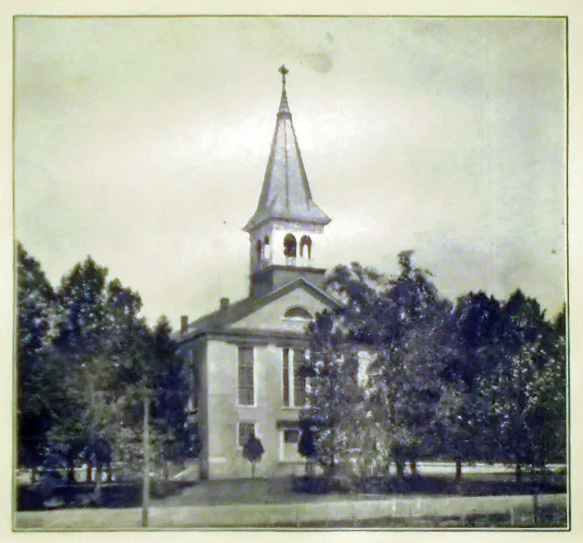
One of the most enduring reminders of the old place-name is Dryland Union Church at Hecktown, in present-day Lower Nazareth Township. The congregation dates its establishment to 1763, when local Lutheran and German Reformed congregations joined together to build a place of worship. The first building stood on land belonging to Caspar Wistar, near the present intersection of Route 191 and Steuben Road. A second church, built of stone, was dedicated on August 15, 1790. A new church building followed in 1849.
The two congregations continued sharing the church for nearly two centuries. In 1967, the union was formally dissolved. The Lutheran congregation retained the historic building, now Trinity Lutheran Church, while the Reformed congregation moved to its new Dryland United Church of Christ building.
The surviving church records are especially valuable to genealogists. Registers of baptisms beginning in 1763, together with later marriage, burial, and other church records, provide information about many families who lived in the surrounding countryside.
Drylands Pond
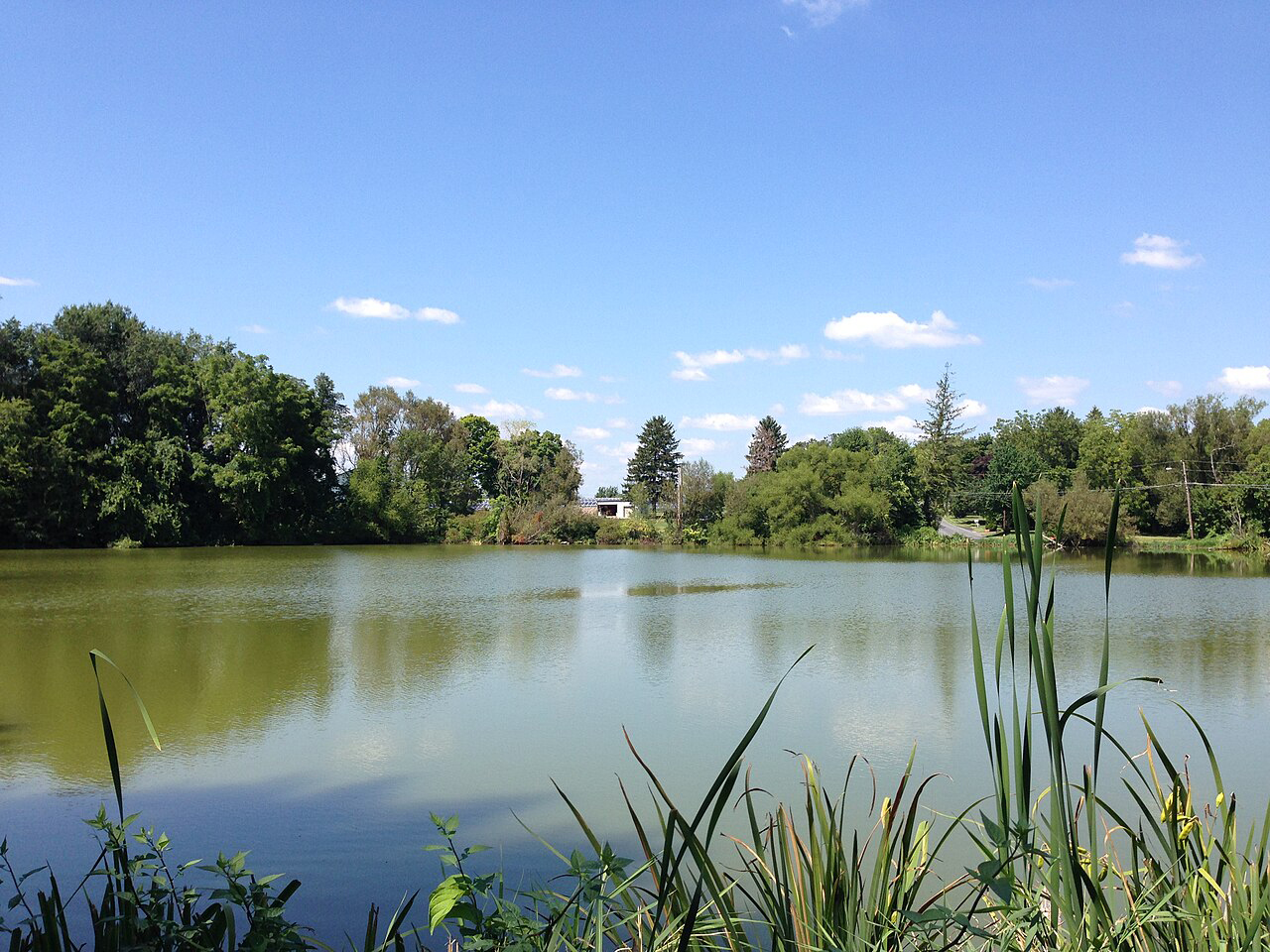
Another surviving geographical name is Drylands Pond, now known as Green Pond, in Bethlehem Township, about a mile north of Farmersville. The pond has an unusual property history. According to A. D. Chidsey Jr., the Penn family sold the surrounding lands but carefully excluded the pond itself from the adjoining property deeds. Consequently, ownership of the small body of water remained with the Penn family and its descendants long after the surrounding countryside had passed into private hands.
In 1931, H. S. Snyder, who owned much of the adjoining property, acquired the pond from Elizabeth Frances Sybil Stuart, a descendant of William Penn living in England. The deed was dated October 27, 1931. Chidsey believed this might have been the last remaining piece of Penn family property in Northampton County.
From Barrens to Farmland
By the nineteenth century, the Dry Lands had lost much of their earlier reputation for desolation. The same limestone soils that settlers had once considered unsuitable supported substantial agricultural production. Farms, roads, churches, and communities had gradually transformed the landscape. The original regional name largely disappeared as settlements and townships developed their own identities. Nevertheless, it survived in local church names, historical documents, maps, and occasional references to the old Drylands.
The Straub Family Connection
The Dry Lands also appear in the history of the Straub family of Northampton and Carbon counties. A biography of David H. Straub, published in John W. Jordan’s Historic Homes and Institutions and Genealogical and Personal Memoirs of the Lehigh Valley, Pennsylvania, describes his grandfather, Theodore Straub, as having been born at Dry Land, a small hamlet between Easton and Bethlehem. According to the biography, Theodore was a distiller and a man of some standing in his community. He had five sons—Emanuel, Daniel, John, David, and Thomas—and three daughters. His son David Straub, who married Polly Oliwine (Mariah Magdalena Olewine), later lived in Towamensing Township, in what became Carbon County. Their son Levi Straub (1829–1898) was my third great-grandfather.
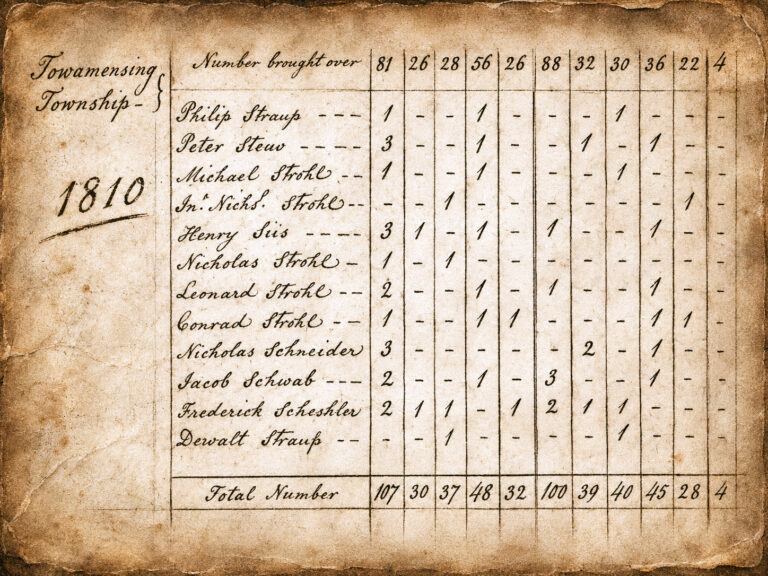
The reference to Dry Land provides a geographical clue to the family’s earlier history, although Theodore’s exact birthplace within the region has not yet been established. The old Dryland Church registers and Northampton County property and tax records may provide further evidence of the family’s presence there.
Sources
- Chidsey, A. D., Jr. The Penn Patents in the Forks of the Delaware. Northampton County Historical and Genealogical Society, 1937, particularly pp. 20–21 and 26–31.
- Jordan, John W., editor. Historic Homes and Institutions and Genealogical and Personal Memoirs of the Lehigh Valley, Pennsylvania. Volume I, pp. 387–388.
- Dryland United Church of Christ: Our History. History of the Dryland Union Church and its successor congregations.
- Palmer Township: History. Discussion of the Dry Lands, proprietary landholdings, and the settlement dispute.
- Hanover Township: History. Account of the Manor of Fermor and the early Drylands.
- E&R Library & Archives: Dryland Church Collection. Historical church records and archival holdings.
- Encyclopedia of Greater Philadelphia: Walking Purchase. Historical background on the 1737 land transaction and its consequences for the Lenape.
- Hecktown Cemetery (The Dryland Yard) by Richard Mammana