Around Chadds Ford Book
The 20th century was a time of great change for the people of Chadds Ford. The horse and carriage became obsolete as the automobile gained popularity. Dirt roads were paved with concrete and became highways as the automobile replaced the railroad as the main means of transportation. Farmland became housing developments as the landscape changed from rural to suburban. Although today’s residents would hardly recognize the Chadds Ford of the early 1900’s, they share many of the same values of their earlier counterparts: concern and love for family, community, and the Chadds Ford way of life.
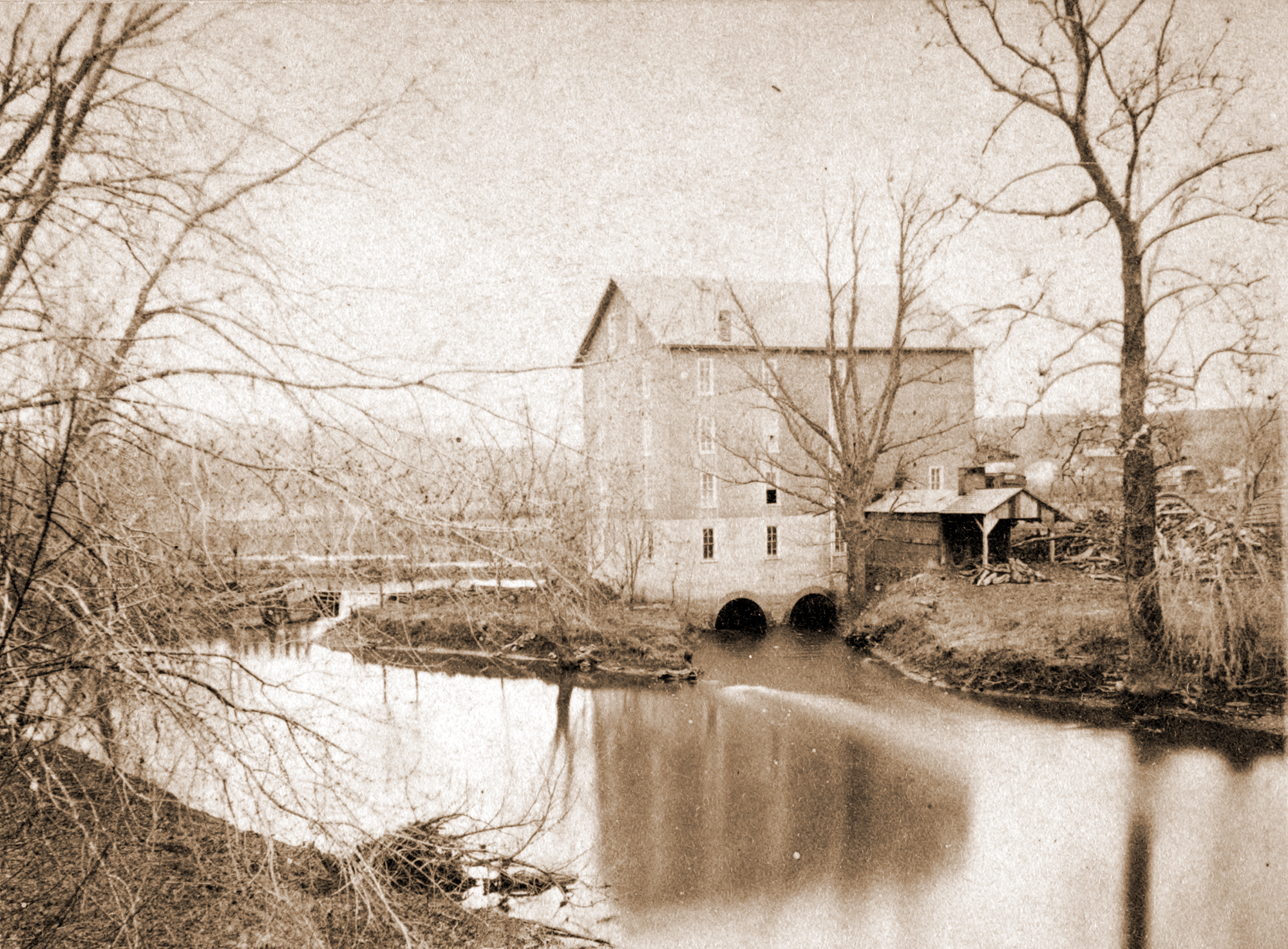
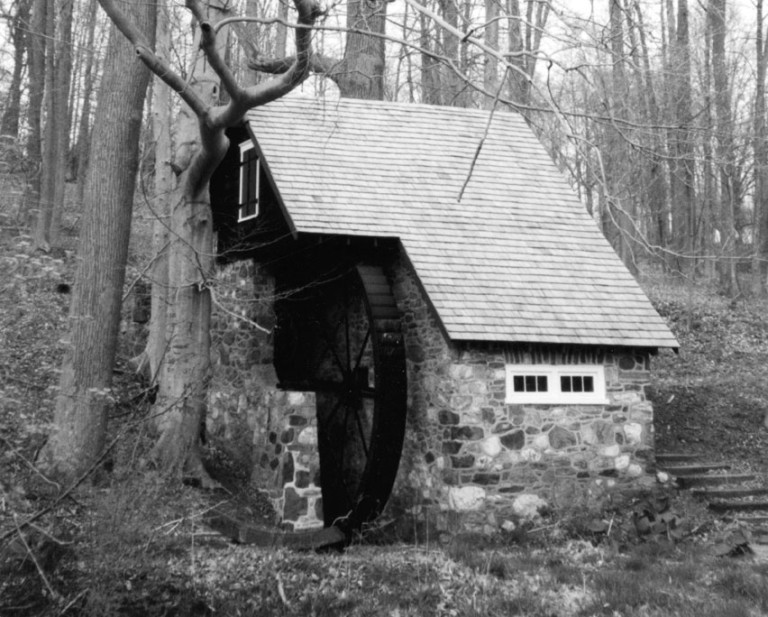
Chadds Ford is well known today for its artistic heritage, mainly through the work of artist Andrew Wyeth. In 1898, Howard Pyle, noted illustrator, started a summer art school in the old Turner grist mill, just across the road from the Benjamin Ring House/Washington’s Headquarters. Many artists were attracted to this school, including Frank Schoonover, N.C. Wyeth, Violet Oakley, Sarah Stillwell, and Maxfield Parrish.
Chadds Ford was also home to regular families who worked in its stores, public buildings, and farms. They were doctors, blacksmiths, millers, postmasters, mothers, fathers, and children. Businesses included the Chadds Ford Inn, a post office, a creamery, a blacksmith shop, two churches, some stores, a barber shop, a railroad station, and a country grocery store.
In the early 1900’s, Chadds Ford was still a small sleepy village surrounded by rolling hills and farmlands. It remained largely agricultural until just after World War II. During the decades following World War II, the face of Chadds Ford began to change as farms were sold or subdivided and developments were built. Today, even though Chadds Ford is a rapidly growing community with a multitude of housing developments, much of the area is still open space, thanks to local land-preservation efforts.
Around Chadds Ford Images of America Book
In 2005 I published a book of vintage Chadds Ford area photos in conjunction with the Chadds Ford Historical Society. The previous year, I had created an exhibit for the Historical Society called “Changing Times: Chadds Ford People & Places.” This was an exhibit of vintage photos of the town of Chadds Ford dating from about 1870 to about 1950. I learned a lot about Chadds Ford and the people who lived there and I connected with many old-timers who shared their memories and knowledge with me. Even famed Andrew Wyeth came to view the exhibit! But I was disturbed by the possibility that my hard work would be lost after the exhibit was taken down. I wanted to preserve my efforts permanently. So I sent off a book proposal to Arcadia Publishing and was pleasantly surprised when it was accepted. Arcadia Publishing is a company with offices in New Hampshire and South Carolina that specializes in publishing local history books. Around Chadds Ford is part of their Images of America line, a series of photograph books that celebrates the history of neighborhoods and towns across the country.
Here’s an overview of the book:
Chadds Ford grew along an important early thoroughfare where it crossed the Brandywine Creek. Travelers along this east-west highway between Philadelphia and Baltimore were obliged to ford the creek at property owned by businessman John Chads. At first, farms, mills, and homesteads composed the architectural landscape. As the town grew, so did businesses such as the Gallagher General Store and the Chadds Ford Hotel. By the end of the nineteenth century, wealthy Philadelphians, attracted by Chadds Ford’s pastoral setting, began to build stately summer homes. Artists, too, were inspired by the area’s countryside, and N.C. Wyeth made the town his permanent residence. Around Chadds Ford features photographs from 1870 to 1950, when the town enjoyed the sophistication of these newcomers, but retained its rural flavor.
Author Karen Smith Furst sorted through the Chadds Ford Historical Society’s collection of over one thousand unpublished photographs to choose the outstanding images presented here. Combined with lively and informative captions, these photographs open a window into life in Chadds Ford.
The Images of America series celebrates the history of neighborhoods, towns, and cities across the country. Using archival photographs, each title presents the stories from the past that shape the character of a community today. Arcadia is proud to play a part in the preservation of local heritage, making history available to all.
Surnames mentioned in the book include Andress, Arment, Gallagher, Luke, Seal, and Twaddell.
This 128-page book features close to 200 previously unpublished photographs of life in 20th century Chadds Ford. Buy it here.
The images I used came mostly from the Society’s collection of about 1,000 photographs. About 600 of those photos were donated to the Society in 1991 by Anna Seal Schlosser, a woman who had grown up in Chadds Ford, and who, although she did not live there as an adult, retained fond memories of the town. The photos had been taken by her uncle, Edward J. S. Seal (1896-1955), a talented amateur photographer.
Members of the Seal family have been in Chester County since the 18th century. Edward traced his lineage back to William Seal (1726-1769) and Susan Temple. His grandparents were William Heyburn Seal (1822-1910) and Deborah Twaddell (of the Twaddell Mill Twaddells). The son of Howard Ellsworth Seal, Edward grew up in Chadds Ford on the Locust Knoll Farm. When his father retired from farming and sold the property in 1929, all members of the family moved into town. Howard and his sister Mary Emma lived in the house on Route 100 just south of Route 1. It’s the first house on the right as you head south on 100 from 1. Edward probably lived with them. His brother William H. Seal lived with his wife Estelle and their four children (one of which was Anna Seal) in the house now owned by the Brandywine Conservancy on Station Way Road. It’s the house just north of the township hall on the left hand side. Later Edward lived at the Irénée du Pont estate called Granogue, Delaware with his brother William H. Seal. He never married. He was a member of the American Trap Shooters Association and an amateur photographer. He died suddenly at the age of 58 in August of 1955 and was buried in Birmingham Cemetery.
Chadds Ford Research
Some Chadds Ford area facts and tidbits that you may find interesting:
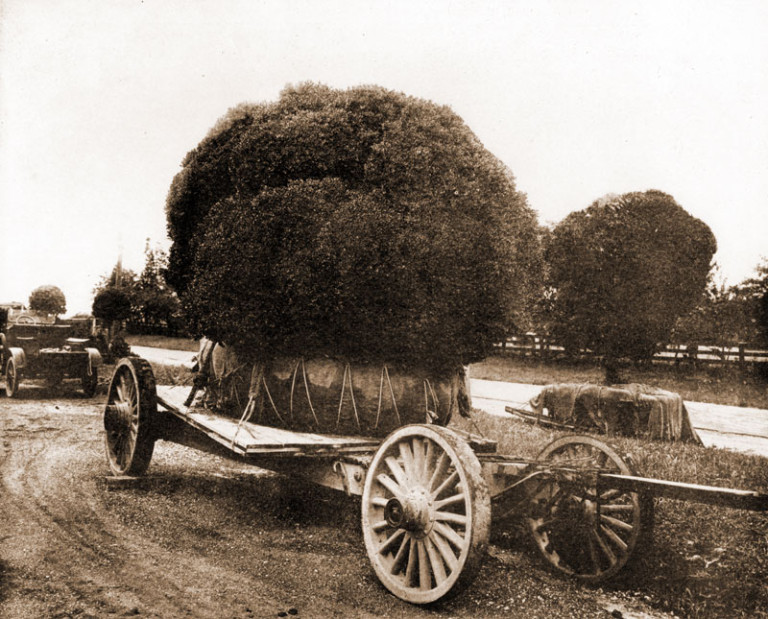
Thank you for the history of Styer’s Nursery in Concordville. My family went there as part of our Sunday drives in the country. That was 60+ years ago and brought back pleasant memories.